


Short answer: yes — but probably not in the way most people expect. A smart kitchen or bathroom upgrade rarely doubles your money; instead it usually returns around half of what you spend in straight resale value, while doing something arguably more valuable — making your home far easier to sell, and helping it command a stronger offer. Adding a bathroom, rather than just refreshing one, tends to show the clearest percentage uplift. Here’s what the UK research actually shows, and how to spend so the work pays off.
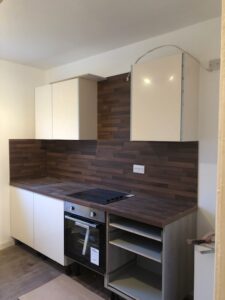
The short answer
Kitchens and bathrooms are consistently ranked among the most popular and highest-impact home improvements in the UK — Nationwide’s 2025 research found that 71% of homeowners who renovated in the last five years did a kitchen, a bathroom, or both. They’re the rooms buyers scrutinise most, and the ones they least want to rip out and redo themselves. That’s why a recently updated kitchen or bathroom is such a strong selling point: buyers will pay more for a home where the big, disruptive jobs are already done.
One honest caveat up front: we’re renovation specialists, not surveyors or valuers, and the figures below are general UK market guidance. Actual uplift depends heavily on your area, your property and the quality of the work.
How much value does a new kitchen add?
For a straight kitchen refit, industry studies (including Zopa’s long-running home-improvement index) put the return at roughly 50% of what you spend — so a £12,000–£18,000 kitchen might add somewhere around half that in pure resale value. That sounds modest, but it understates the kitchen’s real role: it’s the single biggest “wow” factor on a viewing and often the room that clinches or loses a sale. The bigger percentage uplifts you’ll see quoted (5–15%, occasionally more) generally apply where the project also adds floor space or opens up the layout, such as an open-plan kitchen-diner, rather than a like-for-like replacement.
How much value does a new bathroom add?
Refurbishing an existing bathroom to a good standard typically adds in the region of 4–6% to a home’s value, with the higher end for well-judged, modern finishes. As with kitchens, the cash return on a refit is often around half the spend — but a tired, dated bathroom actively puts buyers off and drags down offers, so the upgrade frequently pays for itself in a smoother sale.
Adding a bathroom: the clearer win
If you want a measurable value bump, adding a bathroom beats upgrading one. Nationwide’s “What Adds Value” research puts a second bathroom at around 6% of the value of an average home. The reason is simple supply and demand: a good rule of thumb is one bathroom for every three bedrooms, and ideally every floor with a bedroom should have one. A four- or five-bedroom house with a single bathroom is genuinely harder to sell. Adding an en-suite to the master bedroom is one of the most reliably popular upgrades — most buyers say they’d pay more for one.
What adds the most value (and what to avoid)
- Don’t over-personalise. Bold, bespoke choices that suit your taste can deter the next buyer. Neutral, modern finishes have the broadest appeal.
- Mind the layout. Position matters: a downstairs bathroom opening directly off the kitchen is off-putting to a large share of buyers and can actually reduce value. Upstairs bathrooms and en-suites add more than awkwardly placed ones.
- Spend on the structure, save on the showroom. Sound plumbing, waterproofing and tiling matter more than ultra-premium fittings. Mid-range fixtures fitted properly beat luxury fittings fitted badly.
- Quality of installation is everything. Wonky tiles, poor seals, weak ventilation or incorrect waste falls are obvious to a surveyor and chip away at offers. A clean, properly finished job is what holds the value.
- Don’t over-spend for your street. There’s a ceiling to what any given property can fetch; pouring a luxury budget into a modest home rarely returns it.
A Glasgow note: tenements and older homes
Glasgow’s housing stock leans heavily towards pre-1919 sandstone tenements and older flats, and that shapes where the value lies. Many of these properties have a single, sometimes awkwardly placed bathroom, so adding a second bathroom or a well-designed en-suite during a tenement renovation can be especially worthwhile. Buyers in this market also prize sympathetic, modern updates that respect period features — a contemporary kitchen or bathroom that still suits the character of the flat tends to sell best.
The bottom line
Treat a kitchen or bathroom renovation as an investment in liveability and saleability first, and a value uplift second. Done well, it makes your home more enjoyable now and easier to sell later; done badly or over-personalised, it can do the opposite. If you’d like a realistic steer on what’s worth doing for your property and budget, we’re happy to advise. Explore our kitchen renovation and bathroom renovation services, see typical bathroom and kitchen costs, or get in touch for a free, no-obligation quote.
Frequently asked questions
A kitchen refit usually returns around half of what you spend in added value, rather than its full cost — but a modern kitchen is one of the biggest factors in whether a home sells, and how quickly. Larger uplifts (often quoted at 5–15%) tend to come when the work also adds space or opens up the layout.
Refurbishing a tired bathroom typically adds in the region of 4–6% to a home’s value when done to a good standard. Adding an extra bathroom is the clearer win: Nationwide’s research puts a second bathroom at around 6% of the value of an average home.
Both are high-impact with buyers. Adding a bathroom often shows a clearer percentage uplift and costs less, while a kitchen costs more but is the single biggest “wow” factor on a viewing. The best choice usually depends on what your home currently lacks.
Yes. Buyers consistently pay more for an en-suite to the master bedroom, and as a rule every floor with a bedroom should ideally have a bathroom. In family homes, going from one bathroom to two is a strong selling point.
It can, but it is rarely about doubling your money. Most refits return roughly half the spend in price; the bigger benefit is a faster sale and stronger offers because the “big jobs” are done. Avoid over-personalising or over-spending for your area.
Yes. Poor workmanship that a surveyor or buyer can spot lowers confidence and offers, and an awkward layout can hurt too — a downstairs bathroom opening off the kitchen, for example, puts off many buyers. Quality installation matters as much as the design.