


Quick answer: For most Glasgow kitchens, quartz is the best all-round worktop — non-porous, stain-resistant and low-maintenance, at a mid-to-premium price. Granite suits buyers who want natural stone and will re-seal it periodically. Laminate is the budget winner: modern versions mimic stone convincingly and shrug off daily use, but they can’t be repaired once chipped or scorched. Choose based on how you cook and how much maintenance you’ll accept — the sections below compare cost, durability and upkeep in detail.
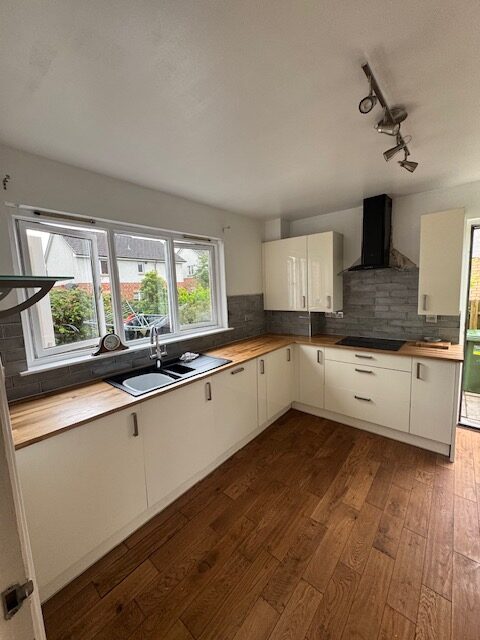
Walk into any kitchen showroom and every worktop is “fantastic.” The truth is that each material has genuine strengths and real-world drawbacks — and the right choice depends on your budget, how you cook and how much maintenance you’re willing to do. Here’s the honest, fitter’s-eye comparison of the main kitchen worktop materials, with rough UK prices to help you plan.
Laminate — best for tight budgets
Laminate is a decorative layer bonded to a chipboard or MDF core. At roughly £20–£100 per square metre it’s by far the cheapest option, comes in a huge range of styles (including convincing stone and wood effects), and is straightforward to fit. Modern laminate is far better than the stuff of 20 years ago.
The trade-offs: it isn’t heat-proof (a hot pan will scorch it, so always use trivets), it can’t really be repaired once chipped or burnt, joins/seams are visible, and the lifespan is around 10–15 years. Its biggest weakness is water — if moisture gets into the chipboard core around the sink, it swells and the worktop is finished. Great value if you’d rather put the budget into better cabinets and upgrade the worktop later.
Solid wood — warm and repairable
Solid timber brings warmth and natural character that man-made surfaces can’t quite match, at a mid-range price a little above laminate. Its best feature is repairability: scratches, scorches and water marks can be sanded out and the surface re-oiled, so a wood worktop can be renewed almost indefinitely. The catch is maintenance — it needs periodic oiling and prompt wiping of spills, as it’s sensitive to standing water. Ideal if you love the look and don’t mind a little upkeep.
Solid surface (Corian-style) — seamless and smooth
Solid surface is an acrylic-and-mineral material moulded into seamless shapes — its headline feature is invisible joins, giving one continuous run with integrated sinks possible. It’s non-porous and hygienic, and minor scratches can be buffed out. Typical cost is around £200–£400+ per square metre. Downsides: it scratches more easily than stone, it isn’t heat-resistant (trivets essential), and some lighter colours can discolour over time. A good middle option where a flawless, joint-free look matters.
Quartz — the low-maintenance workhorse
Quartz is an engineered stone — roughly 90–95% crushed natural quartz bound with resin and pigment. It’s one of the toughest surfaces you can buy, and because it’s non-porous it never needs sealing, resists stains brilliantly and is genuinely hygienic (bacteria can’t penetrate it). You also get a consistent colour and pattern, so what you see in the sample is what you get on the slab, in a wide palette including marble and concrete effects.
Installed cost is typically £350–£800 per square metre for standard ranges, rising to £900–£1,400 for premium brands such as Silestone or Caesarstone. Two things to know: it isn’t fully heat-proof (the resin can scorch, so use trivets), and it’s heavy — it needs professional templating, fabrication and fitting, with proper cabinet support. If you’re spending on a kitchen, skimping on the worktop is a false economy; quartz is what we most often recommend.
Granite — natural stone that loves heat
Granite is natural stone, prized for unique, one-off patterns and exceptional durability — properly cared for, it can last a lifetime. It offers the best scratch resistance of the common materials and superior heat resistance, handling hot cookware better than most, which suits keen cooks. Average cost is around £400–£500 per square metre.
The main difference from quartz is that granite is more porous, so it needs periodic sealing and a pH-neutral cleaner to avoid staining (turmeric, red wine and beetroot are the usual culprits). Like quartz, it’s heavy and needs professional installation. Go in with your eyes open about the upkeep and it rewards you with a surface full of natural character.
Which worktop should you choose?
- Tight budget: laminate — or put the saving into better units and upgrade later.
- Warmth and a natural feel you can refinish: solid wood.
- A seamless, joint-free look: solid surface.
- Lowest maintenance and best all-rounder: quartz.
- Natural stone for keen cooks who don’t mind sealing: granite.
Whatever you choose, the quality of the templating and fit matters as much as the material. We’ll talk you through the options with real samples on a kitchen renovation in Glasgow, give you a straight answer on what’s worth spending on, and you can see typical kitchen renovation costs too. Get in touch for a free, no-obligation quote.
Frequently asked questions
It depends on what you want. Quartz is non-porous so it never needs sealing, resists stains well and gives a consistent colour. Granite is natural stone, handles heat better and has unique one-off patterns, but it is more porous and needs periodic sealing. Both are extremely durable.
Granite and quartz are the most hard-wearing surfaces you can buy. Granite has the edge on heat resistance, while quartz wins on stain resistance and low maintenance. Neither is completely scratch-proof or heat-proof, so trivets and chopping boards are still sensible.
As a rough guide, installed quartz typically runs from around £350–£800 per square metre for standard ranges, rising to £900–£1,400 for premium brands. Granite averages around £400–£500 per square metre. Laminate is far cheaper at roughly £20–£100 per square metre.
No. Quartz is engineered to be non-porous, so unlike granite it does not need periodic sealing. Day to day, a wipe with warm soapy water is all it needs — no harsh chemicals required.
Modern laminate is much better than the versions of 20 years ago and is excellent value at roughly £20–£100 per square metre. The trade-offs are that it is not heat-proof, cannot really be repaired if chipped or burnt, and water reaching the chipboard core around the sink can make it swell and fail.
Granite copes with heat better, but as a rule you should use trivets on any worktop. Quartz contains resin that can scorch or discolour with a hot pan, and even natural stone can crack from sudden thermal shock.